
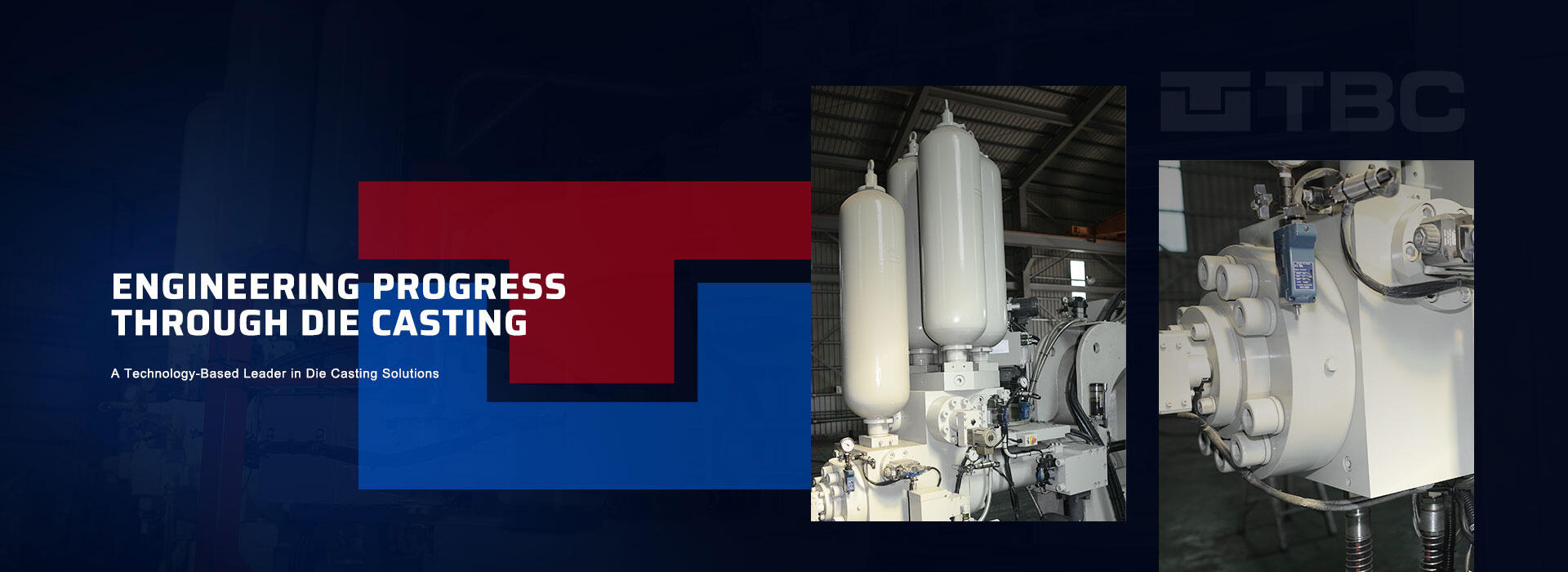
An effective die casting machine maintenance strategy focuses on controlling system variation before defects occur.
These subtle process shifts often go unnoticed in the early stages, yet they directly impact production stability and ISO 9001 quality management requirements, where process consistency and traceability are critical.
The machine may still be running—but the manufacturing process has already been compromised.
When maintenance is delayed or inconsistent, a die casting machine may continue operating while process stability gradually declines. In real production environments, this decline is commonly reflected through:
- Fluctuating injection pressure that compromises part integrity
- Inconsistent die temperature control leading to thermal fatigue
- A gradual decrease in production yield that erodes overall operation efficiency
- Frequent machine parameter adjustments during operation
- Higher hydraulic system stress and component wear
Why Die Casting Machines Experience Performance Degradation
This instability is a direct result of the extreme conditions under which a die casting machine operates. In aluminum die casting, molten metal temperatures typically exceed 650°C (1,200°F), while high-pressure injection occurs within milliseconds.
During every production cycle, the machine experiences continuous exposure to:
- Extreme heat
- High hydraulic pressure
- Rapid mechanical movement
- Continuous thermal expansion and contraction
With every cycle, small but cumulative changes occur, gradually affecting overall system performance over time.
- Plunger tips gradually wear, affecting sealing performance
- Hydraulic oil degrades over time, altering system response
- Cooling efficiency declines as internal buildup accumulates
- Sensor drift influencing process accuracy
- Lubrication decline increasing mechanical friction
- Hydraulic leakage reducing pressure consistency
These changes do not immediately stop production—but they introduce variation. And in high-precision manufacturing, variation is where defects begin.
What Is a Die Casting Machine?
Understanding how a die casting machine works is essential for effective maintenance and performance control.
A die casting machine injects molten metal into a steel mold under high pressure. Once solidified, the process produces precise and repeatable metal components.
Die casting technology is widely applied in industries such as:
- Automotive components
- Electronics housings
- Industrial hardware
- Home appliances and lighting
Based on machine structure and material characteristics, die casting machines are mainly classified into:
Cold Chamber Die Casting Machines
Primarily used for aluminum alloys, requiring high injection pressure and robust thermal control. Cold chamber machines are commonly selected for large structural parts and high-strength applications.

Hot Chamber Die Casting Machines
Typically used for zinc and magnesium alloys, offering faster cycle times due to integrated injection systems. Hot chamber machines are ideal for smaller precision components requiring high-volume production.
Because of these structural differences, maintenance strategies cannot be standardized across machine types.
Why Maintenance Matters in Die Casting Operations
In die casting operations, the condition of a die casting machine directly affects product quality and production stability.
- Injection instability → incomplete filling
- Insufficient clamping force → flashing
- Poor temperature control → reduced mold life
These issues are rarely sudden. They are the result of gradual system deviation. According to industry practices referenced by NADCA (North American Die Casting Association), most process defects originate from uncontrolled system variation rather than sudden equipment failure.
From an engineering perspective, instability emerges when key system variables drift beyond control limits:
- Injection consistency
- Thermal balance
- Mechanical alignment
Maintenance, therefore, is not a routine task—it is a method of controlling system deviation before it affects production.
Most mature operations manage maintenance through three structured levels:
Key Maintenance Practices for Die Casting Machines
Daily Maintenance: Operator-Level Inspection(Die Casting Machine Daily Checks)
Daily inspections are part of standard die casting machine maintenance practices. A structured die casting machine maintenance schedule is essential for long-term stability. The following checklist outlines the essential daily inspection items for a die casting machine.
| Item | Check Point | Purpose |
|---|---|---|
| Hydraulic oil | Level and pressure | Maintain system power |
| Lubrication | Plunger lubrication | Reduce wear |
| Injection system | Plunger & sleeve | Ensure injection stability |
| Cooling system | Water flow | Maintain thermal balance |
| Safety devices | Emergency stop | Ensure operator safety |
Daily checks are performed by operators to detect early-stage abnormalities before they escalate. These checks require minimal time but play a critical role in preventing unexpected downtime in die casting machines.
Periodic Inspection: Maintenance Scheduling
Without a defined schedule, maintenance often becomes reactive and inconsistent. In such cases:
- Maintenance occurs only after issues appear
- Decisions depend on operator experience
- Equipment wear is not systematically tracked
Over time, this leads to increased failure risk and higher operational costs. A structured die casting machine maintenance schedule provides consistency and predictability:
| Interval | Maintenance Task |
|---|---|
| Weekly | Cooling system inspection |
| Monthly | Hydraulic oil analysis |
| Quarterly | Clamping system calibration |
| Annually | Injection component replacement |
For hydraulic systems, two critical indicators are widely monitored:
- Total Acid Number (TAN): Indicates oil oxidation and degradation, commonly evaluated based on ASTM standard testing methods for lubricant condition monitoring.
- Water Content: Indicates contamination and corrosion risk
When TAN increases or water content rises, hydraulic stability declines—often before visible failure occurs in die casting machines.
Professional Maintenance: Core System Inspection
Over extended production cycles, deeper system-level inspection becomes necessary. For operations requiring expert support, our die casting machine maintenance service provides system-level diagnostics and preventive maintenance solutions.
| System | Focus | Common Issue |
|---|---|---|
| Injection system | Plunger / Sleeve | Pressure instability |
| Clamping system | Tie bars / force | Flashing |
| Hydraulic system | Oil condition | Pressure fluctuation |
| Cooling system | Flow channels | Overheating |
| Control system | Sensors | Signal errors |
Among these, two systems are particularly critical:
- The injection system, which directly determines filling behavior and product quality
- The hydraulic system, which provides the driving force for all machine operations
Maintenance Workflow in Die Casting Operations
Maintenance in advanced manufacturing is a continuous, structured process, not an isolated task. A complete maintenance workflow typically includes:
- Inspection of key system conditions
- Monitoring of performance indicators
- Adjustment of operational parameters
- Verification of system stability
This structured approach ensures that maintenance actions are consistent, measurable, and aligned with production requirements.
Maintenance Decision Framework: From Diagnosis to Action
In die casting operations, equipment issues are typically identified through observable symptoms—rather than the underlying machine condition itself.
On the production floor, operators first notice signals such as:
- Injection pressure instability
- Abnormal die temperature behavior
- Declining production yield
These signals guide the diagnostic process:
For this reason, effective maintenance should begin with what is observed, then trace back to the root cause, and finally determine the appropriate corrective action.
The following decision tree is designed to support this diagnostic process—guiding maintenance teams from observed symptoms to root causes and appropriate actions.
However, symptom-based diagnosis alone is not always sufficient. To make accurate maintenance decisions, teams must also consider machine structure, as different designs often lead to different failure patterns and maintenance priorities.
Different machine designs lead to different failure patterns—and therefore different maintenance priorities.
Machine Type Considerations:
| Machine Type | Key Concern | Maintenance Focus |
|---|---|---|
| Hot Chamber | Metal buildup & residue | Flow path cleaning |
| Cold Chamber | High pressure wear & thermal stress | Lubrication, cooling, component lifespan |
In hot chamber die casting machines, the injection system operates in continuous contact with molten metal, making metal buildup and residue accumulation the primary concern. Regular cleaning of the flow path is essential.
In cold chamber die casting machines, the system operates under high pressure and repeated cycles. As a result, the injection system is exposed to continuous wear and thermal stress, requiring strict control of lubrication, cooling efficiency, and component lifespan.
For this reason, maintenance strategies cannot be generalized—they must align with both the observed symptoms and the specific machine type.
Field Insight: How TBC Stabilized a Declining Die Casting Line
In a recent case supported by TBC (Technology Base Corporation), an aluminum die casting production line experienced a gradual decline in yield over a three-month period—despite no obvious machine failure.
At first glance, the equipment appeared to be operating normally. However, based on TBC's on-site diagnostic process and maintenance data review, several underlying issues were identified:
- Plunger wear had exceeded acceptable tolerance levels
- Hydraulic oil analysis showed rising TAN (Total Acid Number)
- Cooling system flow was inconsistent and unstable
TBC implemented a structured maintenance optimization plan, including:
- Monthly hydraulic oil monitoring with TAN tracking
- Adjustment of component replacement cycles based on wear conditions
- Enhanced inspection protocols for cooling system performance
Within three months, production yield stabilized and process consistency improved.
This case highlights a key principle in die casting operations:
- Failures are rarely sudden.
Performance degradation is gradual—and, more importantly, measurable.
From Maintenance to Smart Die Casting Systems
Once maintenance is stabilized, the next step is monitoring.
Smart Die Casting Monitoring Systems enable real-time tracking of:
- Hydraulic pressure
- Injection speed
- Die temperature
This allows engineers to detect deviations before defects occur.
TBC (Technology Base Corporation) provides integrated die casting solutions, including machines, auto ladlers, sprayers, and full automation systems—supporting stable, ISO-aligned production environments.
When maintenance and data converge, a die casting machine becomes a predictable system—not just equipment. Once maintenance becomes predictable, the next step is to make it measurable.
FAQ
Build a Maintenance Strategy That Keeps Production Running
Explore TBC's die casting solutions and maintenance support for stable, ISO-aligned production.